Category: Covid-19

  • Patterns in Hospital Admissions

    Between two and four times a day, the Health Ministry releases updated statistics on the coronavirus in Israel. The frequency of these releases makes it feel like we’re getting real-time detailed insights into what’s going on with the virus and Israel’s attempts to manage the pandemic.

    The data includes:

    • the number of tests so far today (and how many of those tests were given to diagnose Covid-19 rather than to confirm recovery),
    • the numbers of new and recovered cases
    • how many people are currently admitted in hospitals
    • How many cases are considered serious or moderate
    • The number of patients on ventilators
    • The number of deaths

    All of these numbers are routinely updated to give a national picture. There’s also regional-level data on infections and recoveries.

    But the impression of continuous data is actually a little misleading. Israel’s a small country, but it still has four HMOs that do the virus testing at hundreds of national sites. Around 30 hospitals have Covid-19 patients in their wards. All that data has to be collated by people at each of these places, sent to the Health Ministry and fed into their systems.

    Patients in hospital with Covid-19 in Israel July/August, according to the Health Ministry

    The graph above tracks Israel Health Ministry daily data on the number of hospitalised Covid-19 patients. I’ve also added a mark for each Saturday on the graph.

    In July, hospital admissions rose rapidly from 230 at the start of the month (not graphed) to around 750. Since then, throughout August, they’ve bounced around between that level to as high as 875.

    Looking closer, you’ll notice that the number of hospital admissions seems to spike around Saturday or Sunday. In August, these early-week spikes have tended to dip again towards the middle of the week before rising again towards the weekend.

    If I had to guess, I’d put this down to reporting cycles from the 30 hospitals rather than real spikes. Perhaps some hospitals only report their admission numbers once a week? Or they use Friday and Saturday to find any cases over the week that slip through the cracks?

    Or perhaps the admissions spikes are real and there’s some reason to explain them. Perhaps families visit their older relatives on Shabbat, and force Grandpa to go to hospital with that nasty cough, for example. Or maybe it’s a lagging indicator of some infection pattern which happens on a similar cycle.

    UPDATE: I missed something important and obvious here: many hospitals don’t do discharges on Saturday or for much of Friday. Patients might even have to wait until Sunday evening to get their clear Covid test and go home. That could also lead to a bulge in admitted patients over the weekend while healed people wait to be allowed to go home. Thanks to Abi who pointed this out. Only thing is, wouldn’t we expect to see that bulge disappear by Monday?

    Either way, don’t stress the weekend hospital spikes. They seem to be normal and fade away over the week.
  • The Gamzu Plan is… bigger gatherings?

    The Gamzu Plan is… bigger gatherings?

    The much-anticipated Gamzu Plan was presented to Israel’s Coronavirus Cabinet by Prof Ronni Gamzu today, and it seems like the plan is mostly to relax the restrictions on gatherings that are currently in place.

    First, some relevant facts that Gamzu presented:

    • 36-39% of Israel’s new Covid-19 cases are Haredim (Ultra-Orthodox) — three times their share of the Israeli population. This number is actually falling, but the Health Ministry is concerned that the apparent drop could be due to Haredim refusing to get tested when displaying symptoms rather than a real drop in morbidity.
    • 20% of the new cases are Arab citizens/residents, which is pretty close to their share of the population.
    • Overall, Israel’s daily morbidity is stable at around 1600 daily cases, but it needs to come down significantly.

    Now, the plan. Gamzu proposes that each Israeli local authority should be assessed on three parameters:

    1. The number of new infections a week per 10k residents
    2. Proportion of positive tests per week
    3. The rate of growth of new cases in the last week

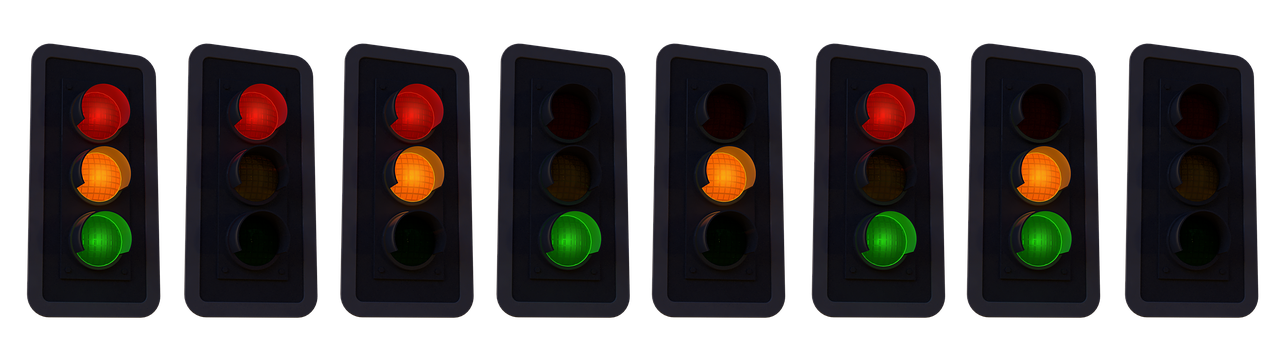
    Every two weeks, towns will be given a score based on these three measures and assigned as green, yellow, orange or red.

    Sounds like a good idea so far. So what happens then?

    Well,

    Red neighbourhoods:
    gatherings restricted to 10 indoors, 20 outdoors

    Orange neighbourhoods:
    gatherings restricted to 25 indoors, 50 outdoors

    Yellow neighbourhoods:
    gatherings restricted to 50 indoors, 100 outdoors

    Green neighbourhoods:
    gatherings restricted to 100 indoors, 250 outdoors

    In practice, this is a significant relaxation of the current gathering rules (20 indoors, 30 outdoors) for everywhere except the red zones. The red zone rules will be what the national rules were in July.

    There is more to the plan, including more extensive use of infection hotels in red zones and more support for those affected areas. But I honestly struggle to see how this plan could possibly reduce Israel’s daily infection rate. It seems more likely to increase the rate!

    Another issue is more practical. Under today’s numbers, the Haredi town of Modiin Illit would probably be a Red Zone. But the nearby city of Modi’in has very few cases and is probably a Green Zone. If residents of Modi’in Illit want to hold a party, what’s to stop them from booking an event hall in Modi’in? Won’t this just result in people from Red Zones driving en masse to Green towns to hold large events, infecting the locals?

    In any case, it might not matter. The coronavirus cabinet discussed the Gamzu Plan tonight, but a vote was scrapped at the last minute after the Haredi parties opposed the plan, claiming it was too restrictive on synagogues. They also objected because (due to the high infection rate in the Haredi community), the Red Zones would end up being disproportionately Haredi towns, which former Health Minister Litzman implied would be discrimination.

    So there’s a plan, but it seems to mostly allow bigger, riskier gatherings. And it didn’t even get voted on yet.

    Additionally, Gamzu prepared a contingency plan for a fairly restrictive lockdown over the Jewish month of Tishrei, covering the High Holy Days and Sukkot. It was stressed that this plan ideally shouldn’t be needed, as long as the Gamzu Plan succeeded in reducing new daily infections from 1600 to 400 in the next month.

    Even with a restrictive lockdown, getting from 1600 daily cases to 400 could take longer than a month. I’m sceptical that the Colour Zones plan will reduce infection at all, let alone to 400-a-day within a month. And it certainly won’t reduce anything if it isn’t even in effect yet.

    So get ready for a Tishrei lockdown, I suppose!

  • Of Masks and Meters

    Of Masks and Meters

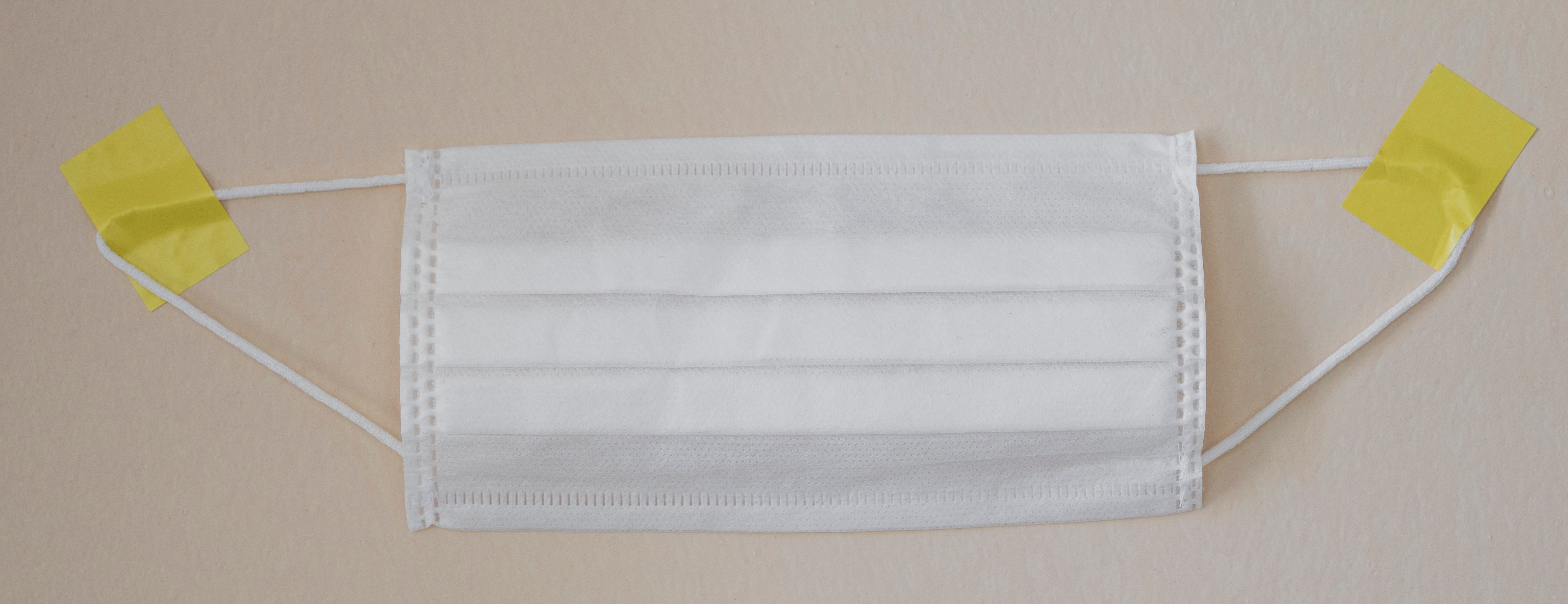
    Yesterday, Israel decided to scrap limits on the percentage of the workforce that could be in the office. Instead, each company will be in charge of appointing a person in charge of ensuring the employees maintain masks and two meters’ distance (where possible), and that 50 person meetings don’t occur unless absolutely necessary.

    This is reminiscent of Israel’s earlier coronavirus strategy: open everything up, tell people to maintain masks and two meters’ distance, and hope for the best.

    That strategy didn’t work, for two key reasons:

    Lack of Compliance

    In late May, with coronavirus numbers in only the dozens daily, the Israeli government was quick to take a victory lap, hailing itself for how its own policies had beaten the virus. PM Benjamin Netanyahu urged everyone to go out and have a beer. Politicians said that vigilance was still necessary, and that people should adhere to mask and distancing guidelines to prevent the coronavirus from re-surging. But the louder voice, which was internalized by the Israeli public, was that the virus had gone away; it was safe to go out again.

    Israel did not engage in any sort of mass public campaign to educate the public about the possibility of a second wave, the reason behind mask-wearing, the importance of distancing, or how to wear masks properly. To do any of that would have taken away from its self-promotional message of victory.

    There is no reason to think that compliance would be better this time around. Despite the spike in coronavirus cases, the lack of compliance with masks and meters is evident to anyone who enters a shop or walks down a public street. Why would the public change its behavior if it hasn’t even been informed about why changing its behavior matters?

    Masks and Meters Can Only Do So Much

    The virus is spread in two  primary ways: 

    1. Droplets, which are spread through speech, coughing, and breathing
    2. Airborne particles

    In order to for healthy person to catch the virus, they need to be infected with a certain amount of viral load. If a sick person breathed on you for just a second, you probably wouldn’t receive enough viral load from that to actually catch the virus.

    The longer a person speaks, coughs, and breathes in your vicinity, the more viral load they emit through droplets. The mask worn by the sick person provides a physical barrier, stopping those droplets from reaching you. The mask worn by the healthy person also provides a barrier, but a mask’s main purpose is that if someone sick wears it, their mask will help lower the amount of viral load that they give to other people. Additionally, wearing a mask means you’re breathing in and out less of the droplets in the air. This means you’re contributing less viral load to the air if you’re sick, and inhaling less of it if you’re healthy.

    If a room is well aerated, that helps shift the droplets and the airborne particles, so that if there is viral load in the room, it will be transported out of the room sooner rather than later.

    While masks reduce the viral load emitted by a sick person at any given moment, they don’t get rid of it completely. Similarly, masks reduce – but don’t eliminate – the amount of viral load ingested by a healthy person.

    The longer you stay in the room with someone sick, the more viral load you get from them. That’s because they emit a certain amount of virus each minute, which adds up, and you’re near them. That’s why the Ministry of Health’s official quarantine guidelines apply to people who are within two meters of a sick person inside for 15 minutes.

    If you spend the entire day in an office with a sick person, even if you’re both two meters apart and wearing masks, by the end of the day there’s likely to be a lot of viral load in the air, both through particles and droplets — and this could be enough to overcome the distance of masks and meters that lie between you.

    It remains a mystery why the government thinks that a tactic that failed and helped create the second wave would  be effective at keeping case numbers down when we are still in the middle of that second wave.

  • Covid roundup 19 August

    Just a few bits of virus-related news that didn’t merit their own post:

    • The Health Ministry today reported 53 additional virus deaths that took place over July and August in care homes. They had not been included in the reporting until now. This brings the number of deaths from Covid-19 since 1 July to 451. The Health Ministry has suggested that more deaths might have been missed, too.
    • The border guards at Ben Gurion airport suspect that Israeli travellers could be using forged coronavirus tests to enter foreign countries. Multiple identical documents that stated a passenger had recovered from the virus and had obtained two negative tests, signed by the same doctor at the same Jerusalem clinic, were spotted by the guards, who’ve referred the matter to the police.
      • (Incidentally, that makes me wonder if all of the returning Israelis who used overseas tests to argue out of a mandatory 14-day quarantine were on the level, or if some of those tests were fake too….)
    • Israel and Ukraine are trying to work out what to do about the annual Rosh Hashanah pilgrimage to Uman. After initial reports that Israelis would be banned from attending, it seems like a deal is being discussed where 5000-8000 visitors will be allowed. To enforce this limit, measures like banning Israeli charter flights may be imposed.
  • Govt continues reopenings while warning of infection spike

    Govt continues reopenings while warning of infection spike

    If it’s hard to discern any kind of strategy in the Israeli government’s coronavirus strategy, it’s because there isn’t one.

    Prof Ronni Gamzu accepted the role of “Coronavirus Czar” nearly a month ago, but he’s spent that month mostly giving mixed messages about restrictions and making high-profile gaffes. Last week he said that the rise in infection in Arab communities in Israel after Eid was a “mass terror attack” against the public — he apologised almost immediately, but that sort of poor judgement doesn’t bode well for his abilities as a communicator.

    The Gamzu Plan to lower community infection is supposed to go to the Cabinet on Thursday. In the meantime, though, the government has been removing restrictions:

    First, the ten-person limit on indoor activities was increased to 20 people inside in all cases, and outdoor congregations are allowed up to 30. The Knesset’s Constitution Committee, in coordination with the Haredi parties, is already threatening to annul even this measure. I suspect that the Haredi parties see annulling the rule as a route to lifting limits on synagogues.

    Today, the 30% limit on the number of employees larger companies were allowed in the office was scrapped. It’s been replaced by a requirement for each office to appoint a “coronavirus officer” to enforce the rules on mask wearing, optional 2M distance and temperature checks. In offices, meetings of up to 50 people will be allowed inside, too, overriding the 20 person rule above.

    (In practice, in most workplaces, mask and spacing rules are voluntary at best from what I’ve seen and heard. And even if everyone wore masks and kept apart, sitting in an enclosed space all day with someone else is still a high transmission risk for the virus.)

    Additionally, the government announced that performance venues will reopen from 1 September, with limitations on room capacity still to be announced.

    And, of course, the school year will restart in the first week of September, in a limited fashion.

    All of this is happening as cases in Israel seem to have stabilised around 1600 a day. Health Minister Yuli Edelstein said today that after excluding survey testing in care homes, test positivity is 10-11%, which is worryingly high.

    The first time restrictions were lifted, Israel went from 15 daily cases up to almost our current level within 5-6 weeks. Now, restrictions are being lifted again, piecemeal and quietly, but this time we’re already at 1600 cases; there is the potential for things to get out of control very quickly.

    Gamzu seems to know this. Originally, the plan was to use July and August to control the virus to avoid a lockdown over the festivals. But with Rosh Hashana about a month away, the option of a Tishrei lockdown is being discussed again and seems increasingly likely. But this time, with public compliance with the regulations so low, will anyone actually keep it?

    The Gamzu strategy is due on Thursday. Meanwhile, the reopenings and relaxations continue, hospitalisations are at an all-time high, and it really doesn’t feel like there’s any strategy at all.